HSF RiggerSafe Push Pull Hand Safety Tool - Lifting and Rigging Safety
Introduction
Lifting and rigging operations are among the most hazardous activities in heavy industries. Whether in oil & gas, construction, marine, or utilities, the process of lifting, shifting, or transporting heavy loads demands precision, planning, and strict safety compliance.
According to global safety reports, rigging-related accidents contribute to some of the highest numbers of workplace injuries, particularly hand and finger crush injuries, falls, and struck-by incidents.
The HSF Riggersafe Push Pull Hand Safety Tool has been developed as an advanced hands-free safety tool to reduce these risks, keeping riggers out of pinch points while ensuring full load control.
What is Lifting & Rigging?
Lifting and rigging refers to the movement, shifting, and positioning of heavy loads using cranes, hoists, chains, or slings. It is essentially the transfer of energy from one place to another to handle large objects safely and efficiently.
In any lifting operation, a qualified rigger or signalman plays a critical role in ensuring the load is lifted, guided, and positioned without endangering workers or equipment.
Safe Work Procedures for Lifting Operations
To ensure lifting and rigging safety, strict procedures must be followed:
- Ground Stability – Ensure lifting equipment is set on firm and stable ground.
- Certified Operator – Crane or lifting machine operators must have valid licenses.
- Third-Party Certifications – Both operator and equipment should have updated certifications.
- Crane Condition – Equipment must be in good mechanical condition with fully extended outriggers.
- Permit to Work – No lift should proceed without a permit and risk assessment.
- Load Calculations – Lifting plan, SWL (Safe Working Load), and center of gravity must be confirmed.
- Lifting Tools Inspection – Slings, shackles, and hooks must be in good condition.
- No Standing Under Load – Workers should never be under a suspended load.
- Communication – Tag lines, whistles, and hand signals must be used by trained riggers.
- Environmental Awareness – Stop lifting in high winds or unstable conditions.
These steps drastically reduce the chances of accidents — and tools like the HSF Riggersafe Push Pull Hand Safety Tool make them even safer by eliminating unnecessary hand contact with the load.
Hazards of Lifting & Rigging
Some of the most common risks include:
- Mechanical Failure – Cranes, slings, or shackles breaking under load.
Poor Ground Stability – Leading to crane overturns.
- Overloading – Exceeding crane or sling capacity.
- Power Line Contact – Risk of electrocution.
- Tandem Lifting Risks – Poorly coordinated multi-crane lifts.
- Inadequate Training – Riggers or operators not fully qualified.
- Poor Communication – No clear hand signals or spotters.
- Working Under Suspended Loads – A leading cause of fatalities.
- High Winds – Load swing and instability.
Injury Types: Crushed hands, amputations, fractures, struck-by injuries, back strain, and fatal accidents.
The HSF Riggersafe Push Pull Hand Safety Tool directly addresses pinch point, crush, and line-of-fire hazards by creating a safe distance between riggers and the moving load.
Who is a Rigger and Their Responsibilities
A rigger is a trained worker responsible for moving heavy materials and equipment safely on worksites. Their duties include:
- Setting up lifting gear and crane equipment
- Determining load weight and center of gravity
- Inspecting slings, shackles, and lifting tools
- Using correct sling techniques
- Ensuring barricades and signage are in place
- Communicating with crane operators via signals or radios
- Stopping lifts in unsafe conditions
Types of Riggers
There are three levels of riggers based on competency and lifting capacity:
- Rigger Level 1 – Handles tandem and critical lifts above 50 tonnes.
- Rigger Level 2 – Manages lifts over 10 tonnes and below 50 tonnes.
- Rigger Level 3 – Works with lighter loads below 10 tonnes.
All riggers must hold valid third-party certifications, undergo training, and follow daily rigging checklists.
The Role of HSF Riggersafe Push Pull Hand Safety Tool in Rigging Safety
The HSF Riggersafe Push Pull Hand Safety Tool is specifically designed to support riggers by providing:
- Hands-Free Load Guidance – Eliminates the need to touch suspended loads.
- Extended Reach – Prevents chasing or grabbing swinging loads.
- Ergonomic D-Handle – Reduces fatigue during extended lifts.
- Non-Conductive Shaft – Protects against electrical hazards.
- Integrated Safety Guard – Prevents slips and finger injuries.
- High-Visibility Finish – Improves awareness in busy worksites.
- Durability – Resistant to chemicals, rust, and extreme temperatures.
By addressing the most common hazards of rigging, the HSF Riggersafe Push Pull Hand Safety Tool strengthens compliance with lifting safety standards and reduces accidents.
Industries Benefiting from HSF Riggersafe Push Pull Hand Safety Tool
- Oil & Gas – Pipe spool alignment, cargo net handling
- Construction – Beam and panel positioning
- Marine & Offshore – Dynamic load control on ships and rigs
- Utilities & Maintenance – Electrical and transformer lifting
- Renewable Energy – Wind turbine and solar panel installation
- Heavy Engineering – Precision load positioning in fabrication yards
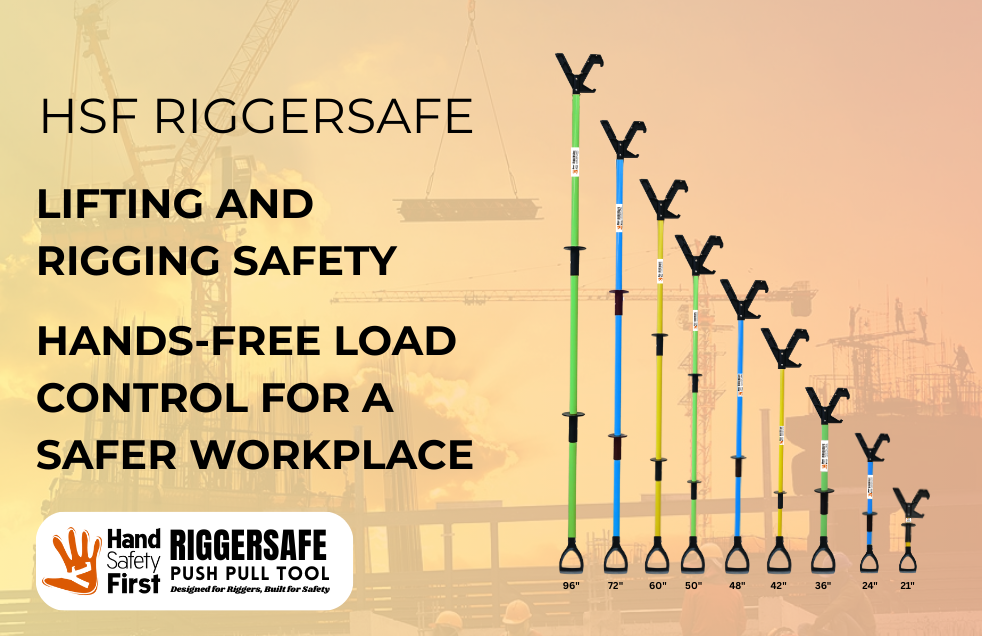
Technical Specifications of HSF Riggersafe Push Pull Hand Safety Tool
- Shaft: Industrial-grade fiberglass
- Lengths: 21” / 42” / 50” / 72” / 96”
- Handle: Ergonomic D-handle with safety guard
- Push Head: 6” wide-face with rubberized grip
- Weight: 2.5–4.5 lbs (depending on size)
- Finish: High-visibility safety yellow
- Operating Temperature: -40°C to 60°C
- Maintenance: Low – simple wipe clean
Conclusion
Lifting and rigging operations involve multiple hazards — mechanical, environmental, and human factors. Without the right safety measures, these risks can result in serious injuries or fatalities.
The HSF Riggersafe Push Pull Hand Safety Tool is the modern solution for rigging safety, giving workers control without risking hand injuries. It ensures compliance, reduces fatigue, and supports safer, more efficient lifting operations.
A safe lift is always a successful lift — and the HSF Riggersafe Push Pull Hand Safety Tool makes that possible.
FAQ Section
What injuries does HSF Riggersafe Push Pull Hand Safety Tool prevent?
It prevents pinch point injuries, finger entrapments, crush hazards, and line-of-fire incidents.
Can it be used in offshore lifting?
Yes. Its fiberglass shaft resists saltwater corrosion and extreme weather.
Does it meet hands-free rigging standards?
Yes. It is specifically designed for compliance with global lifting and rigging safety guidelines.
How is it better than traditional guiding methods?
Unlike bare hands or improvised tools, the HSF Riggersafe Push Pull Hand Safety Tool is engineered for industrial-grade safety and durability.
Have An Enquiry For Us?

Fill The Form
Fill The Form

