Every hand injury
on a suspended load
happens at the same distance.
Close enough to guide it. Close enough to lose a finger to it. The task doesn't change. The distance does.
The hand
that controls
Guiding, steadying, correcting drift. The skill stays. Only the contact point moves.
The point
that doesn't move
Pinch zones, crush zones, landing points, sling interfaces. They don't warn you first.
RiggerSafe® controls the direction.
The hand stays out of the hazard.
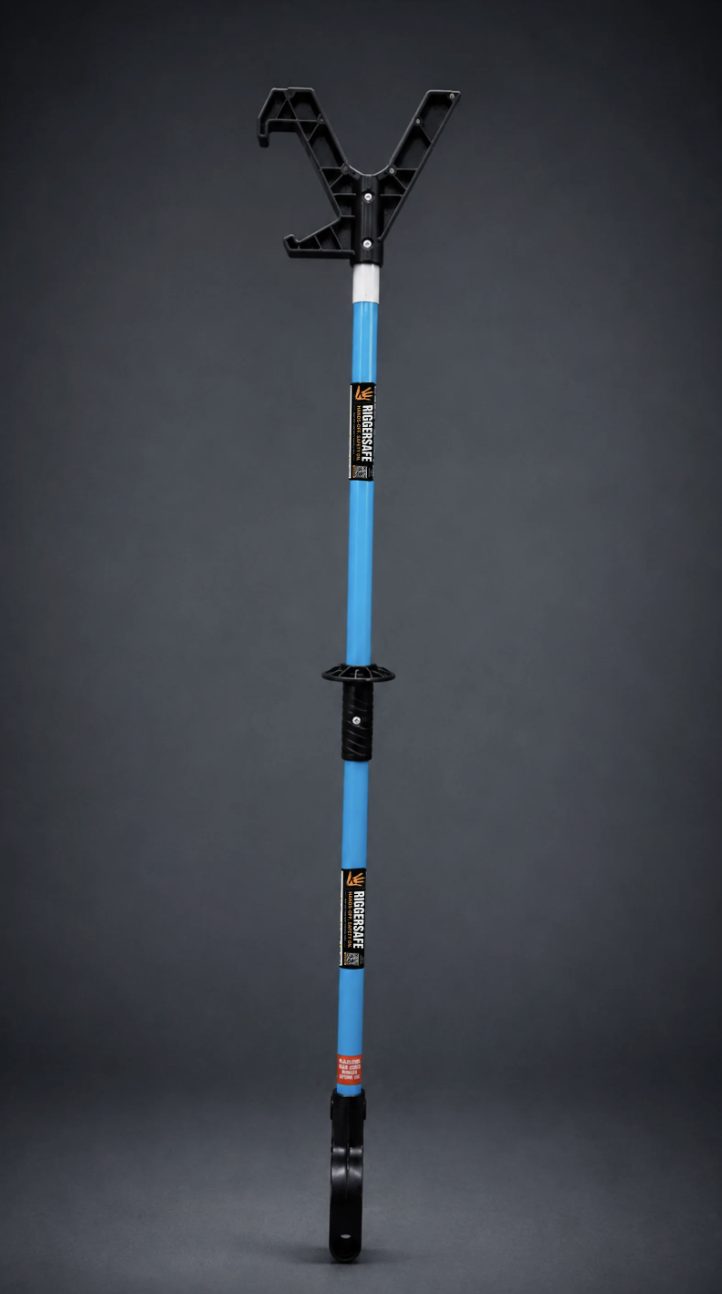
Built for the
load-control moment
RiggerSafe® is built for the moment when the lift still needs human control, but direct hand contact is no longer acceptable.
The load may need to be guided, steadied, corrected, aligned, or landed. Traditionally, that is when the worker's hand moves toward the hazard.
RiggerSafe® changes the contact point.
The hand stays on the tool. The tool contacts the load. The worker stays outside the line of fire.
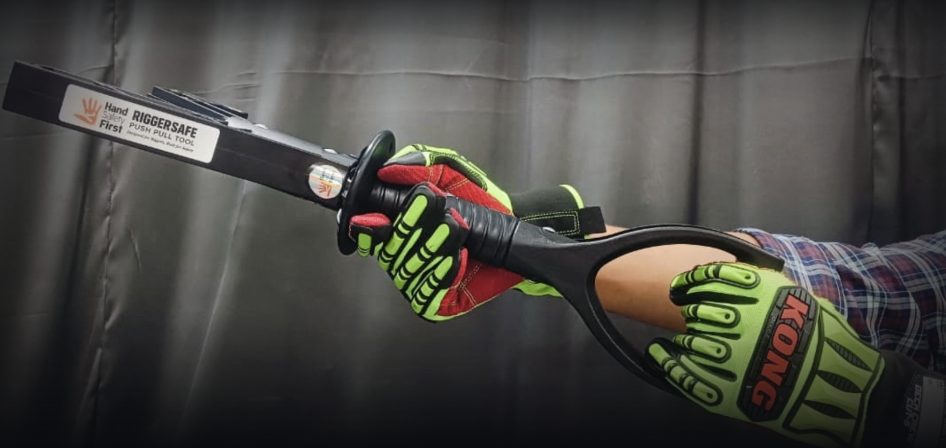
The task gave the hand
no better option
Most hand injuries don't happen because the worker doesn't know the rule. They happen because the task gives no better option — during final load landing, suspended load guidance, swing correction, confined-space control, and alignment before seating.
RiggerSafe® gives the hand somewhere else to be.
The reach is a control measure,
not a preference
Each length sets a different exclusion distance between the hand and the hazard. Choosing the wrong one isn't a comfort problem — it's a distance problem.
For machinery bays, confined areas, workshops, and smaller loads where space is limited.
For fabrication, pipe handling, equipment positioning, and routine workshop lifting.
For larger exclusion zones, open yards, offshore decks, shipyards, and heavy industrial lifting.
Choose the length that keeps the worker's hand outside the pinch zone, crush zone, and final landing zone.
Lengths and visibility options
for site standardisation
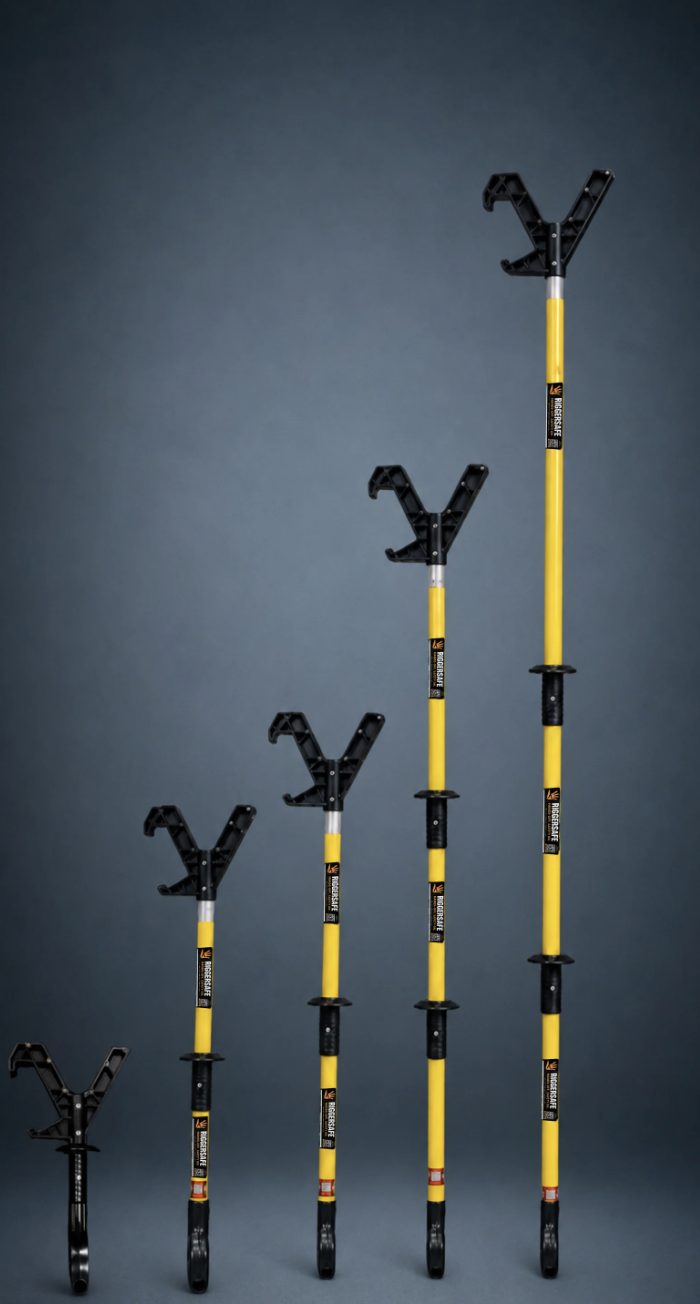
Bright Yellow
High-visibility yellow for open yards, fabrication shops, and offshore decks — built to hold sightline for supervisors and riggers alike.
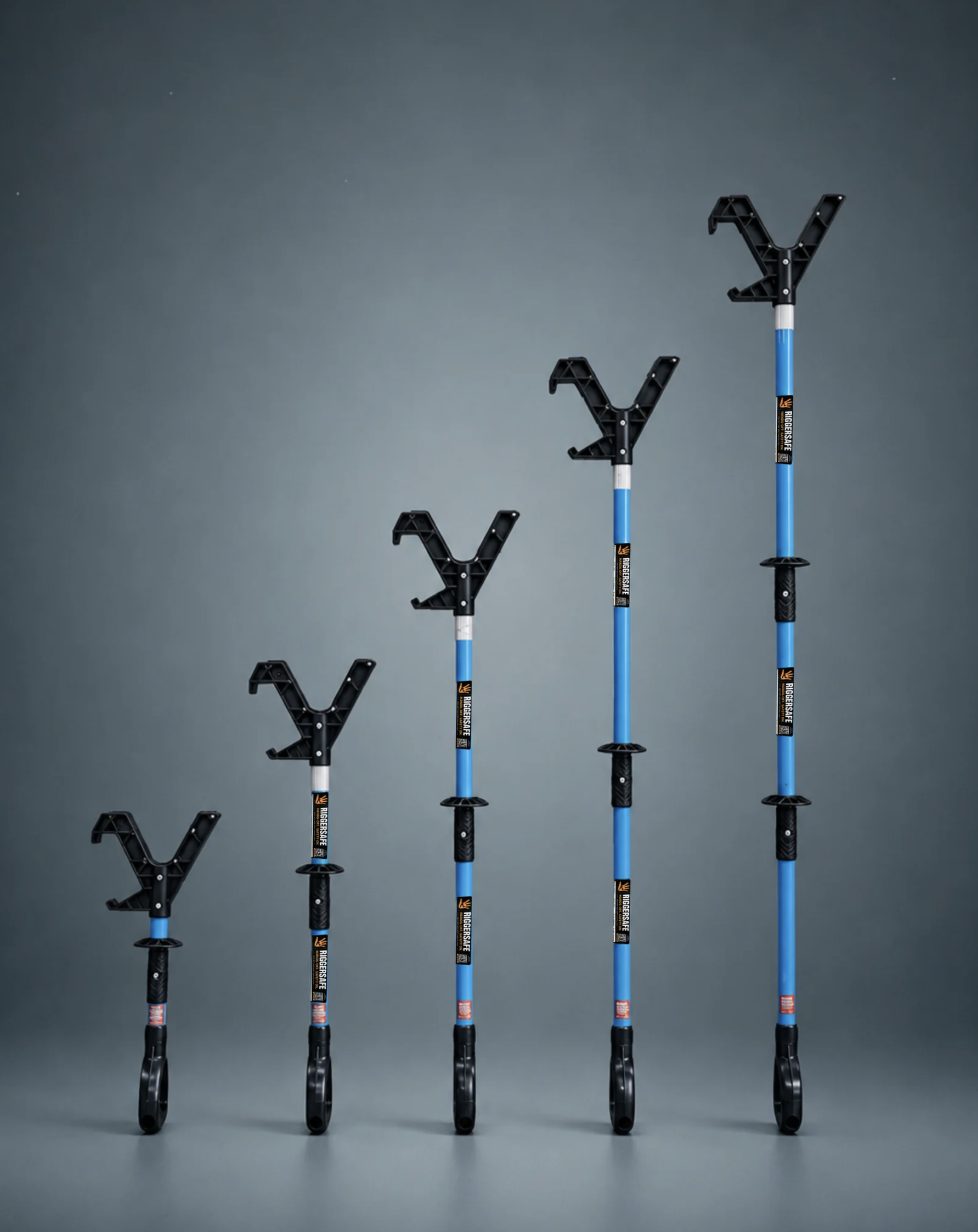
Industrial Blue
High contrast against structural steel and bright deck environments — built for technicians who need pinpoint accuracy aligning suspended or rolling loads.
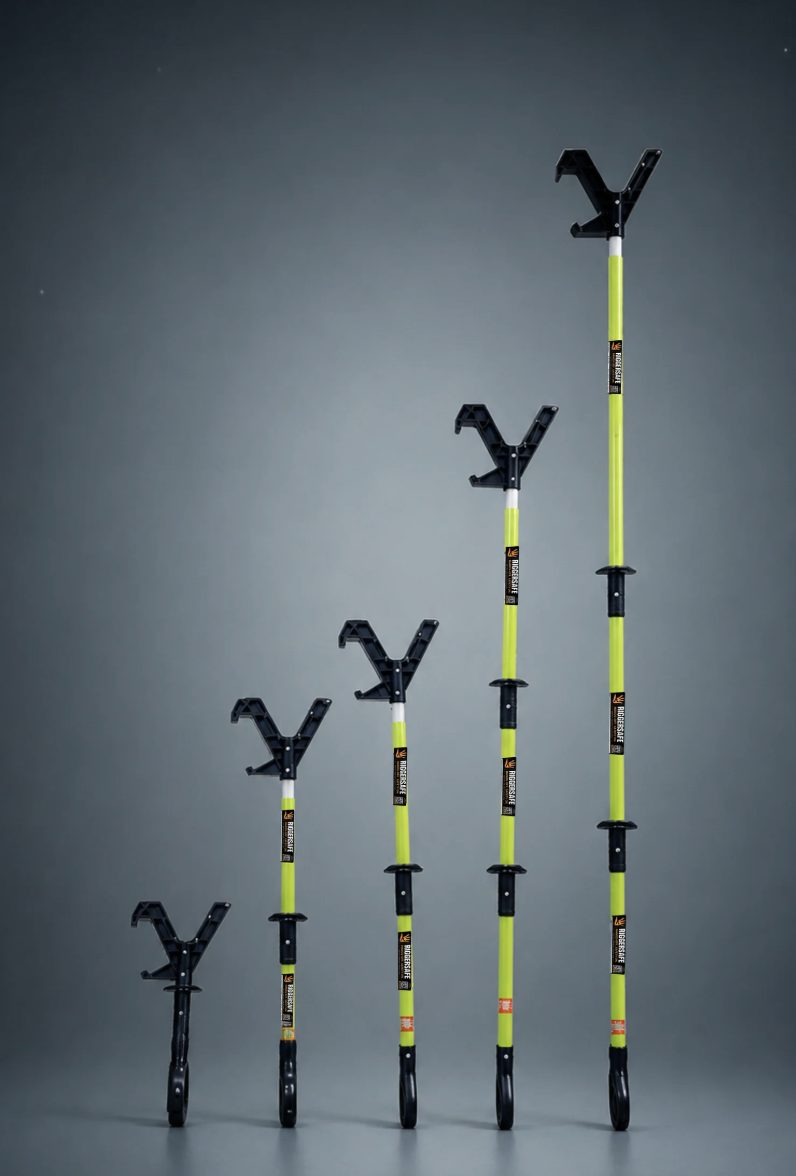
Neon Green
The signal colour for indoor plants, chemical facilities, and confined-space conditions where visibility against clutter matters most.
RiggerSafe® is not lifting equipment
It must not be used to lift, suspend, support, hold, arrest, pry, lever, or carry the weight of a load. The load must always be supported by the crane, hoist, forklift, or approved lifting system.
RiggerSafe® is a hands-off load-control tool — not a load-bearing rigging component.
- Not for lifting loads
- Not for suspending loads
- Not for supporting load weight
- Not for prying or levering
- Not for arresting falling loads
- Not a substitute for the lifting system
RiggerSafe® across global
heavy industry
Doctrine that travels — the same distance principle applied across sites, sectors, and standards.
International Reach
Hands-off load-control applications supplied across international industrial sites.
Heavy Industry Use
Oil & gas, offshore, steel, fabrication, mining, construction, marine, power, and utilities.
Site Standardisation
Multiple lengths and visibility options for task-based selection across a single site or fleet.
Hands-Free Load-Control Programs
Supports lifting plans, toolbox talks, hand-injury reduction campaigns, and no-touch handling rules.
Built across heavy industry
Oil & Gas
For guiding drill pipe, casing, valves, spools, skids, pumps, and suspended equipment without direct hand contact.
Steel & Fabrication
For positioning beams, plates, frames, jigs, fabricated assemblies, and heavy sections during crane-assisted movement.
Marine & Offshore
For controlling loads on decks, vessels, yards, platforms, and congested marine work areas.
Construction
For guiding beams, panels, formwork, structural parts, precast elements, and site equipment.
Mining & Heavy Equipment
For keeping hands away from buckets, frames, wear parts, machinery components, and suspended maintenance loads.
Utilities & Power
For positioning motors, pumps, transformers, panels, generators, and maintenance equipment.
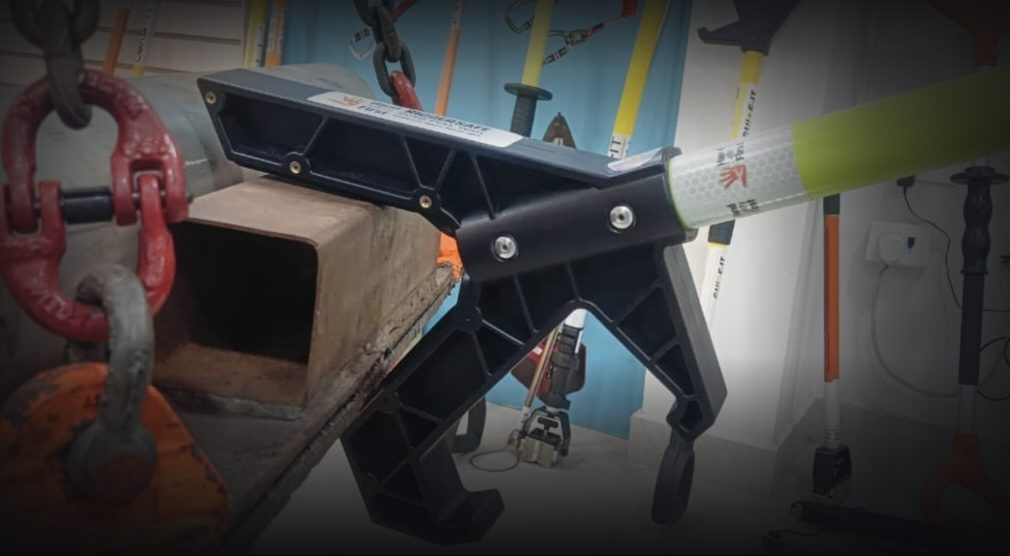
Set against the load,
before the lift
This is what the doctrine looks like on the ground — the head set against the beam, the hand already a length away, before the crane takes the strain.
No hand between load and structure.
No hand inside the final landing zone.
Select the length
your task needs
Tell us the load, the environment, and the exclusion distance required — we'll recommend the colourway and length.